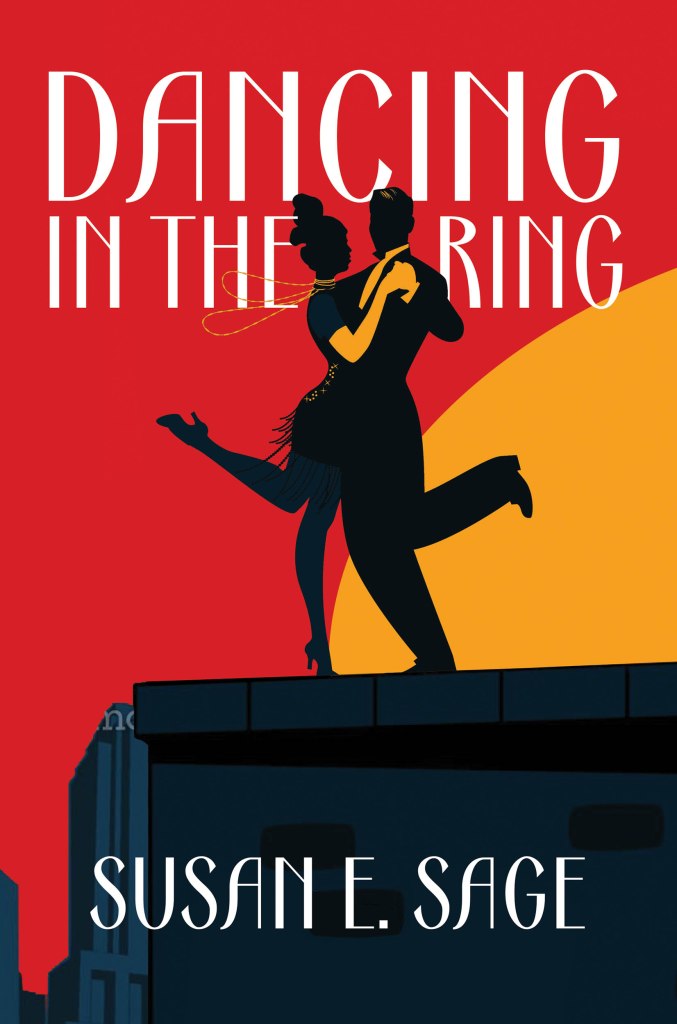
Detroit 1920 – the Great War and the influenza pandemic are over and people are looking towards a better future. Catherine Macintosh and Robert Sage are law students in their final year. Robert is a charming, exuberant, up-and-coming boxer. Catherine, one of the first women in Detroit to become a lawyer, is beautiful, intelligent and strong minded.
Both are from extended working-class families of Irish Catholic background and, like so many of their time, they have experienced the loss of siblings through disease, war and accident. As well, Catherine has witnessed the rancour and violence of her parents’ marriage. Yet, despite everything, Robert and Catherine have a burning desire to change the world for the better.
Using the points of view of both Catherine and Robert, Dancing in the Ring follows their lives from their initial volatile courtship and through their marriage and legal work to the 1940s – a difficult period of rapid change from the vibrant hedonistic 1920s to the grim 1930s. Detroit is brought vividly to life as Susan Sage deftly weaves in the history of the period and the character of the city, with its clubs, speakeasies and criminal underbelly, as well as the later unemployment, labour struggles and soup kitchens . The attitudes of the period are starkly shown – the discrimination, misogyny and racism – with the sometimes dire effects on those at the receiving end. The novel is a poignant social commentary wrapped around real lives. The characterization, particularly of Catherine and Robert is realistic and unflinching, their lives shown with all their human flaws.
Dancing in the Ring is firmly based on the lives of Susan Sage’s own great aunt and uncle and is a work that honours their lives, showing that despite their flaws and their self-doubts, people can make a difference in the lives of others.
 Catherine Meyrick
Pingback: Dancing in the Ring by Susan E. Sage | Catherine Meyrick