Like any farm, the O’Connor’s farm at Valencia Creek had a variety of animals. In their letters to the ‘Young Folks’ page of the Weekly Times between 1906 and 1914, the O’Connor children mention not only the farm animals but those living in the wild. And they also show the roles the children played in the operation of the farm.

Writing in 1906 John O’Connor, then aged 14, seems already to be looking at the farm though a farmer’s eyes.
We are milking seven cows at present, and will have some more in a few weeks’ time. I have a nice little calf, and she is very quiet. We have a nice pet lamb. … We have five horses and thirty-eight head of cattle. There is plenty of water in the paddocks for the cattle now, but in the summer we have to drive our cattle to the creek for water.
Weekly Times Sat 23 Jun 1906 p.27
His sister, Hannah, was to comment eight years later that in summer ‘the cattle generally gather along the creek, lying in the cool shades.’ Weekly Times Sat 11 Jul 1914 p.39
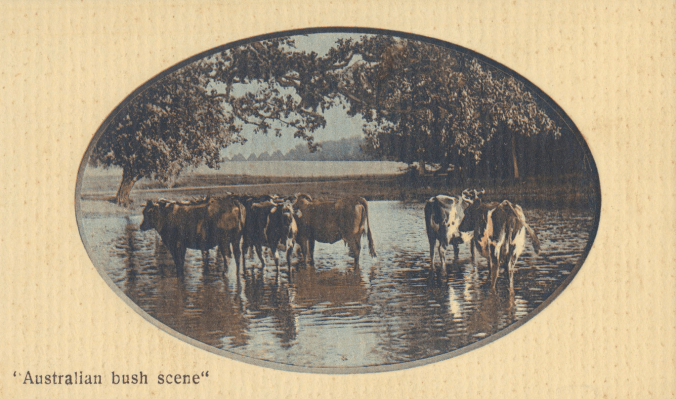
Courtesy State Library Victoria
The children were also involved in the care of the farm animals. In 1910 Hannah wrote,
We are milking eight cows, and feeding seven calves. There is one little calf about six weeks old and I like feeding it. It is so quiet. Sometimes I milk three cows. After the cows are milked, I take them away to the paddock.
Weekly Times Sat 19 Mar 1910 p.42
Later in the year Margaret reported that
We are milking twelve cows and separate the milk and send it to the Boisdale Factory. We have eight little poddy calves, and they are in good condition now as there is young grass springing up everywhere.
Weekly Times Sat 22 Oct 1910 p.39
Hannah provided more information about the cows in 1914.
Some of our cows are very quiet. I can milk them out in the yard, and they stand still till they are milked. When a young cow comes in with a young calf, she is very wild. The little calves are very wild, in the hills and when they see you, they will bellow and their mother runs up to them. When the cows are all milked, we take the milk into the dairy and separate it, and the cream is sent away to the factory to make butter. There are some very wild cattle out in the hills, and when they see you, they will run away and plant in the scrub.
Weekly Times Sat 28 Feb 1914 p.7
Hannah also mentioned their sheep.
We have not many sheep, but there is one pet among them all and she is about nine years old. When lambs are small they are very playful. We have a few lambs up in our paddock., and we can see them jumping on logs and skipping along the ground. There can be more sheep put in a paddock than cattle.
Weekly Times Sat 28 Feb 1914 p.7
Even they youngest, William, had a job. In 1907, when he was four, his sister Margaret wrote
We are getting a lot of eggs every day, and my little brother always brings them in from the nest.
Weekly Times Sat 23 Nov 1907 p.37
As well as the chickens, there were ducks that needed care. Writing the following year, Margaret said,
We have a number of chickens, and also fowls. My sister has two little white ducks, and she takes great care of them.
In that same letter, Margaret spoke of the pets.
My little brother has two cats, and it is fun to watch him playing with them. He also has a little dog, and he often plays with him.
Weekly Times Sat 23 Nov 1907 p.37
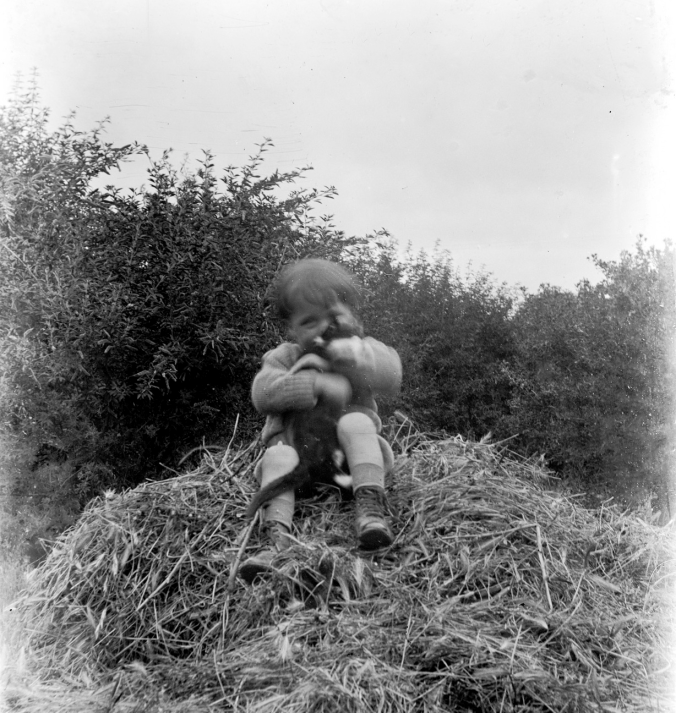
Photographer: Hugh Michael O’Rorke c.1910
Courtesy State Library Victoria
William, finally wrote his own letter four years later.
I am only a little boy, and starting to learn my lessons, so I am getting my sister to hold my hand while I write, because I am only seven years old. I have an old cat, and I do like her. I have had her for such a long time, and I would not like to part with her. She brings in mice and birds.
Weekly Times Sat 4 Mar 1911 p.39
Hannah described the range of skills dogs can have.
When the dogs are small they can be taught many tricks. A friend not very far from our place has a pretty dog, and if you say, ‘Go out and get your tin for some milk’ the dog will go out and find the tin, and bring it in. When the milk is put into the tin the dog will stand up and will not touch the milk till told to have it. If you put a piece of bread on the ground the dog will not touch it till it is told to. Before you tell the dog to have the bread he will sit up and bark. Dogs are very good to keep foxes away from the fowls.
Weekly Times Sat 28 Feb 1914 p.7
She also wrote of the native animals they encountered.
There are many wild animals in the bush. The kangaroos are very wild. When they see you they will run away, and if they come to any fences or logs they will jump them quite easily. Kangaroos can go very fast. When dogs are chasing them you can hear their tails thumping on the ground…. Opossums are very scarce about the bush now. When the opossum runs up a tree you can see where he has pulled the bark off with his nails. They eat all the leaves off the trees, and they leave it quite bare. The opossum lives in a hole in a tree, and generally comes out at night. He is a very timid creature. He has a rather long nose.
Weekly Times Sat 28 Feb 1914 p.7
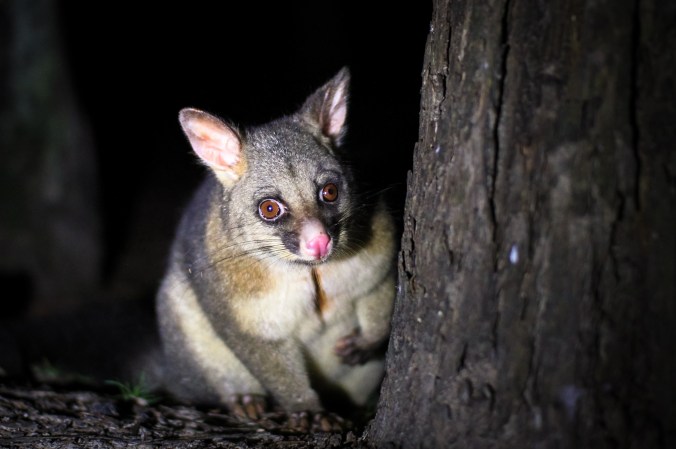
Shutterstock
And then there were reptiles.
You have to be very careful where you walk in summer on account of snakes. There are two kinds of snakes the tiger and the black snake. After the summer is over the snakes go to sleep, and do not come out till the following summer.
Weekly Times Sat 11 Jul 1914 p.39
A pony is mentioned several times in the children’s letters.
In 1906 John said that he had‘a nice little pony and saddle, and ride to school.’ Weekly Times Sat 23 Jun 1906 p.27
In April of 1908, Sarah Ann O’Connor, John’s mother, wrote to the Wa-De-Lock School Committee complaining that the teacher had forced her daughter to tie the pony up during school hours, which she considered to be cruel. If the pony was behaving at school the way Margaret and Hannah describe below, the teacher may have had good reason wanting him restrained.

at Harkaway in the foothills of the Dandenongs.
Photographer: Michael J Drew c.1900
Margaret described the pony’s antics in quite some detail in 1910.
We have a little black pony. He is a short stout pony. He is a very lively little fellow if he meets an engine or a motor-car, or if he happens to get near a train. He tries to pull away, and if he gets a chance he pulls the bridle over his head and is off home. I cannot tie him up anywhere without I put the reins through the rings of the bridle. He tries to get the bridle off when it is like this; but finds he is bested, because the bridle ring squeezes on his mouth and causes him to stop pulling back.
I rode this pony to school two years, and I found him a great benefit because we live seven miles from the school. Sometimes he was very hard to catch in the school yard. Other times he used to stand quite contented till I caught him. One day I was late at catching him, so he got through the little hand-gate and started down the road. He did not get very far. A person was coming up the road and he kindly stopped him for me. I was very thankful, as I would have had to walk home. If I had gone round the road it would have been seven miles, but across the paddocks would be about four or five miles. This pony has never forgotten his old school days. Sometimes when he is passing the gate of the school he wants to go in. He went five years to school altogether.
We have had him five years and he is eight years old now. He is in good condition now and there is not much work for him to do. I generally ride this pony for the mail, or if I have to go any other messages. He is not very treacherous. You can go all round his heels and he does not offer to kick.
He is a nuisance about the house. One day he came to a shed we had potatoes in and he started kicking at it. Of course, we did not notice the side of it was a little shifted. He used to kick the wall to make the potatoes roll out, and as fast as they rolled out he would eat them. This lasted for about two days, and when we noticed it he had about a bag of potatoes eaten. He eats almost anything. I give him potatoes, maize, bread, or almost any kind of vegetables. When he is eating cabbages he hold the end of it with his two front feet and eats the leaves off.
It is very hard to keep him away from the house. He opens the gates if they are not locked, and lets the other horses in also. So if we don’t keep the gates well locked he gives us a lot of trouble, especially when he brings two and three horses in with him. We have a place about five miles from where we live, and he likes going up there where there is plenty of grass to eat and no work to do, and when he is with the other pony he is hard to catch. A while back we put him out in the river paddock with other horses. They stopped alright the first day, but the next day when we went to get them to our surprise they were gone. We had to make haste to catch them. When we caught them they were about three miles above our place. We brought them back and put them in a secure paddock, and we found out afterwards that the little pony was the cause of it all, because he opened the rails of the fence.
Weekly Times Sat 22 Oct 1910 p.39
If Hannah is writing about the same pony, he was quite a handful.
I have a little pony, and my brother rides him to school every day. The pony eats some of the children’s lunch, if they leave it outside. When two get on him he will try and buck them off. If you are trotting along on him he will shy, and sometimes you will get a fall off him, and he will run away and you have to catch him again; but sometimes he will go to kick you if you don’t look out for him. He has never been in a buggy yet.
Weekly Times Sat 28 Feb 1914 p.7
And that is the end of our visit to the O’Connor farm at Valencia Creek. It was such a delight to find these letters and gain a glimpse of the life my grandmother and her siblings lived on their parents’ farm.
Other posts on the O’Connor family’s life at Valencia Creek can be found here.

The O’Connor Children
Mary O’Connor (1882-1953)

Mary married Alexander Avon McDonald (1879-1971) at Maffra in 1906.
Elizabeth O’Connor (1884-1966)


Elizabeth married James Alfred Henry O’Keefe (1888-1943) at Maffra in 1911.
Catherine O’Connor (1889-1973)

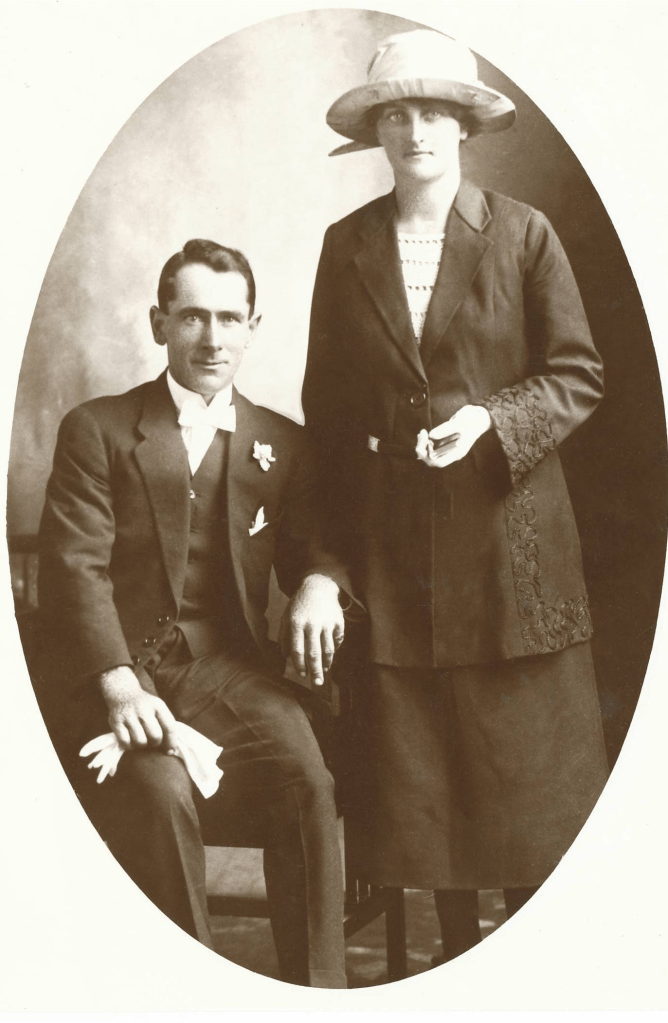
16 January 1923
Catherine married John Daniel McGrath (1887-1971) at Maffra in 1923.
John Joseph O’Connor (1891-1975)

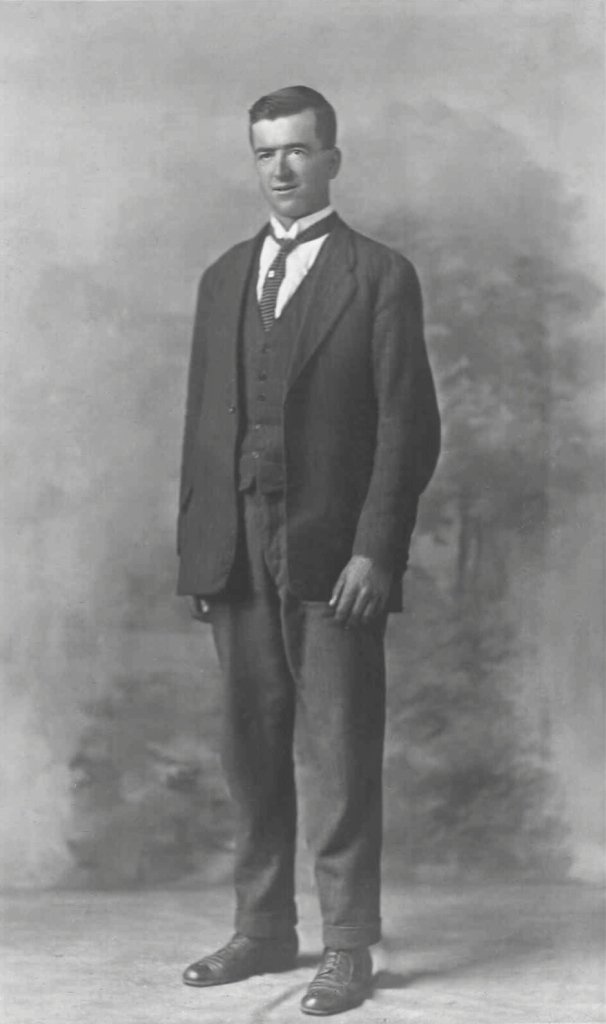
John married Julia Mignonette Orchard (1890-1966) at Maffra in 1923.
Margaret O’Connor (1894-1953)


Margaret married John William Lunn (1906-1963) at Sale in 1929.
Johanna O’Connor (1898-1956)

Johanna married Oscar Alfred William Rivett (1896-1980) in 1926.
Agnes O’Connor (1900-1905)
William Patrick O’Connor (1903-1980)

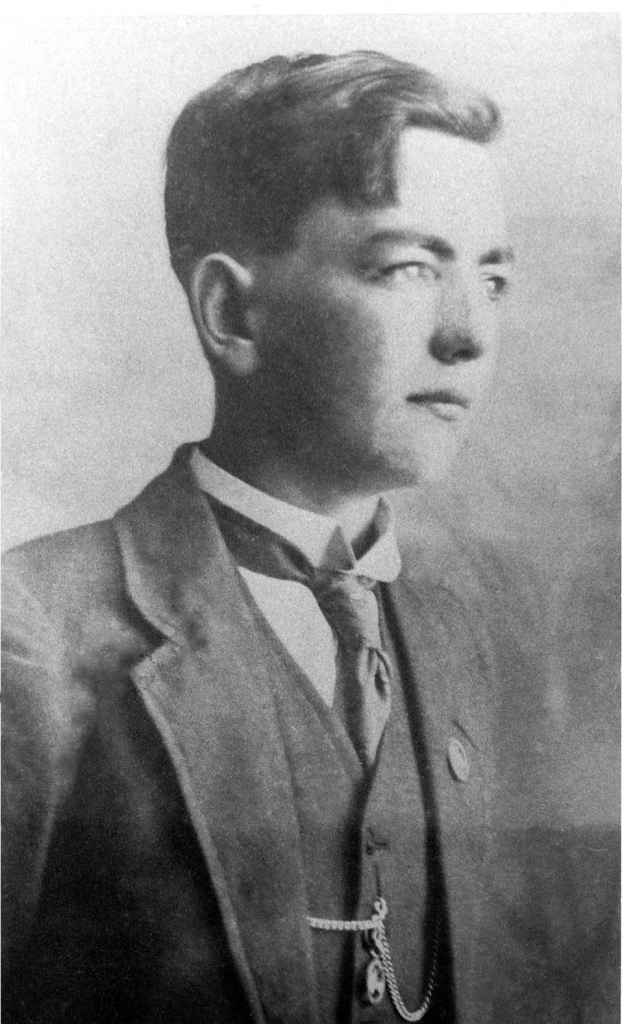
William married Olive Ilean Martin (1908-1983) at Bairnsdale in 1925.
 Catherine Meyrick
Nice to have so many written accounts along with the photos – they add another dimension to your family history.
LikeLiked by 1 person
It was wonderful to find the letters in the newspaper as there were so many things I never thought to ask my grandmother. She was happy to answer questions but wasn’t a natural story teller.
LikeLiked by 1 person