Often, when people talk of their ancestors, they speak of their achievements, their involvement in the great events of their times, the ways they made good. But for some their achievement is that they survived, and that they managed to raise their children to adulthood. This is the case with many ordinary women of the past. Beyond their appearance in birth, marriage and death registers, there is silence. They left behind no writings, the words they spoke are lost with time, yet it is through their struggles and the courage of their everyday lives that we are here today.
I had thought my great-great-great grandmother, Hannah Miles, was one of these silent women. I do not know a single word that she spoke, and I can only guess at what she thought. But when I drew together all the records and reports of her life, and looked closely at the world she lived, I was able to gain a tentative understanding of her and imagine how life’s buffeting affected her.
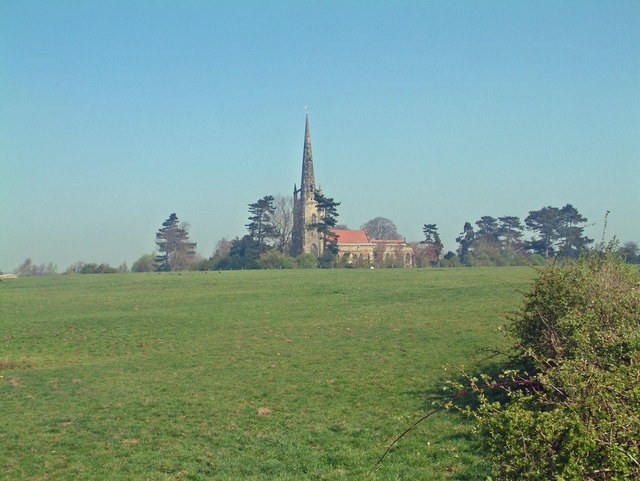
Mark Walton / Clifton Campville Church / CC BY-SA 2.0
Hannah Miles was born in 1820 in Clifton Campville, Staffordshire and christened on 3 December 1820 at St Andrew’s Church. Later in life she was known by the diminutive Annie1 – I will call her that to distinguish her from her daughter Hannah. Annie’s father, James Miles, was a 24-year-old agricultural labourer whose family had lived at Clifton Campville for at least three generations. Two years earlier, he had married, by banns, twenty-eight-year-old Sarah Adams at St Peter’s Church in Derby, twenty miles from Clifton Campville. Sarah had been born in that parish; James must have been working there for at least twelve months as he too was described as ‘of this parish’. Almost two years to the day after Hannah’s birth, another daughter, Elizabeth, was christened at St Andrew’s, Clifton Campville on 2 December 1822. Just over two months on, Sarah Miles was buried in the local churchyard. Her cause of death is unknown but it is possible that it was the result of a complication related to childbirth. James wasted no time, eleven weeks later he married Mary Orton2. Mary was the same age as James and had been born at Clifton Campville so presumable they had known each other since childhood. They went on to have seven children between 1824 and 1843.
Nothing is known of Annie’s childhood. She next appears in the records on 20 September 1838 when she was admitted to the Tamworth Workhouse, six miles from Clifton Campville. She was described as a servant from Clifton Campville and was admitted three more times over the next five months. Annie’s stays were between five and ten days with her final discharge on 5 March 1839. Although this was after the introduction of the draconian Poor Law Amendment Act of 1834, perhaps Tamworth was still operating, to a degree, in the way it always had.
‘Many people used the local workhouse, particularly in the first half of the century, as a hospital, hospice and maternity hospital. People with mental health problems were often taken there first, and were assessed, and then if necessary sent on to an asylum. People who were unable to work because of illness were often given out-relief to enable them to stay in their own homes, but the destitute would become inmates, young people in particular often placed in service or as apprentices to enable them to make a start in life.’(Letter from Staffordshire Archives of 20 Dec 2011)
It is not known where Annie was living and working at the times of her admission – Tamworth? Clifton Campville? Elsewhere? Nor is it known why she couldn’t return to her family. Was she estranged from them or, perhaps, were they not simply able to support her?
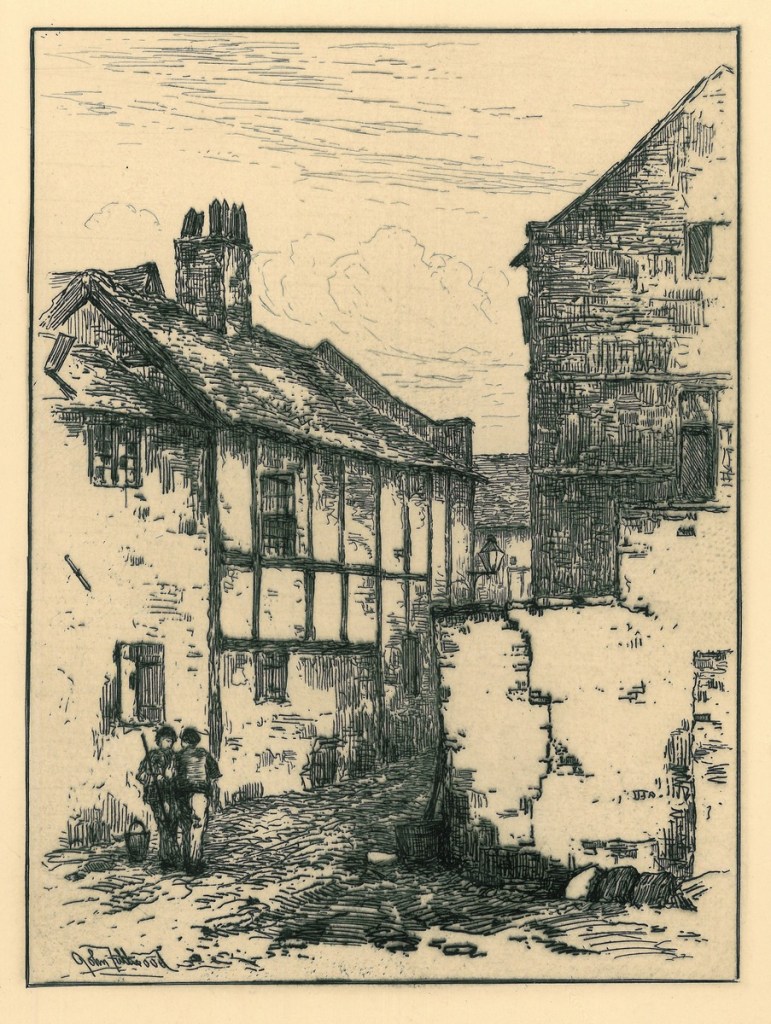
Annie was living in Cat Yard in 1848.
Annie next appears in the census of 1841 when she was living at Rolliston Court, off Stafford Street, Wolverhampton, twenty-five miles from Clifton Campville. She was living with seven other people aged between 15 to 25. The census-taker provided the minimum: ages are rounded to five years and the occupations only recorded for the two men, a locksmith and a gun borer. All appear to be unrelated except for twenty-year old James Jones and fifteen-year-old Elizabeth Jones who may be brother and sister.
Nothing is known about Annie until she was arrested early in the morning of 22 June 1848. The Wolverhamption Chronicle (Wed 28 Jun 1848 p.4) provided detail of her appearance at the Wolverhampton Police Court the next day.
Robbery from the Person in Berry Street
Hannah Miles, the keeper of a brothel in Cat yard3, and Jane Whitton, one of her lodgers, were charged with stealing 3l. and a handkerchief from the person of John Butcher, miner, of Willenhall, in Berry-street, between one and two o’clock on Thursday morning last. Thomas Fox and Edward Morris were also charged with being concerned in the robbery, but the evidence adduced not being sufficient to implicate them in the transaction, they were discharged. The prosecutor stated that about one o’clock on Thursday morning he was returning home to Willenhall, and met the two female prisoners in Berry-street. They asked him for something to drink. He went with them into the Greyhound, and treated them with some liquor. He then had in the inside pocket of his jacket, wrapped up in a handkerchief, two sovereigns and two half-sovereigns. When he came out of the Greyhound with the prisoners Miles put her hand into his pocket, and took the handkerchief and the money, the other prisoner holding his arm, so he could not prevent the robbery.—The prosecutor was cross-examined by Mr Fleetwood, for the purpose of showing that he was in a very drunken state, and that he had been with other women during the night which, however, he denied.—Enoch Lovatt, police constable, stated that on receiving information of the robbery from the prosecutor he went with him in pursuit of the prisoners. He apprehended them in a house in Cat yard, Berry-street. Hannah Miles is tenant of the house, and sets lodgings for loose girls. He searched the house, and found there numerous pawn tickets and a bunch of picklock keys. He did not find the money and handkerchief which had been stolen from the prosecutor. Upon his charging the prisoners with the robbery they denied it.
The two women, Whitton and Miles, were committed for trial at the next sessions.
The Staffordshire Midsummer Quarter sessions began on the afternoon of the following Monday (26 June). Hannah and Jane’s case was heard on the Wednesday. The report in the Staffordshire Advertiser (1 July 1848 p.8) provides additional detail.
… The prosecutor said he was at Wolverhampton on the [2]3rd4 of June for the purpose of selling a horse. He fell into the company of the prisoners who induced him to treat them at a public house and they robbed him when he came out. They then ran off and he would have followed them but was met and knocked down by several men, opposite the old police station.
Enoch Glover, policeman, said he was on duty in Berry-Street on the night of the [2]3rd and saw the prosecutor running after the two prisoners, whom he (witness) followed to Cat Lane, and searched the house where they lodged.
In Miles’ box he found twelve pawn tickets and a lot of skeleton keys, but found no money.
The prisoners were found guilty.
The learned chairman in passing sentence remarked that not only were they abandoned women but it was evident they were connected with a gang of thieves and had therefore become very dangerous to society. To be transported for seven years.
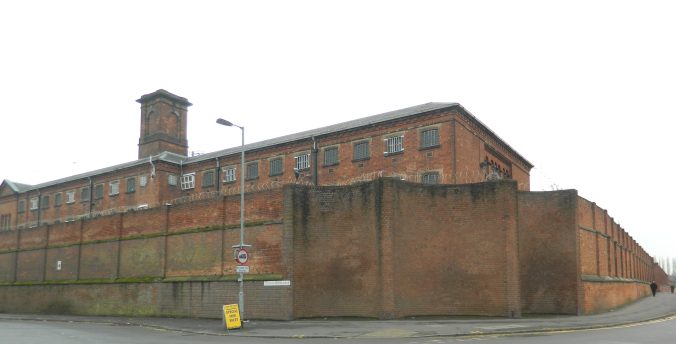
This was Annie’s first serious offence, although she had previously served one month’s imprisonment for drunkenness. Her Conduct Record, compiled on her arrival in Van Diemen’s Land, described her as having been ‘on the town’ for five or six years. While prostitution was not an offence at this time, the police certainly knew who was on the town and attempted to control the women’s behaviour through charges of drunkenness, disorderly conduct and through use of the Vagrancy Act.
Annie and Jane were held at Stafford Gaol but then sent on to Millbank Prison in London, arriving on 23 August. Millbank Prison operated as a holding depot for convicts prior to transportation. On 4 November they left Millbank to board the Cadet, moored opposite Woolwich dockyard. The Cadet then sailed to Portsmouth where it was to leave on 10 November on its third journey to Van Diemen’s Land. On board, as well as crew, were 150 female prisoners and their thirty children. The Cadet also carried seven people classed as passengers: Dr. Bowman, the surgeon-superintendent for the voyage; Reverend W. H. Gibbs, presumably the chaplain; and Mrs Nicoll, the Matron, and her two daughters.
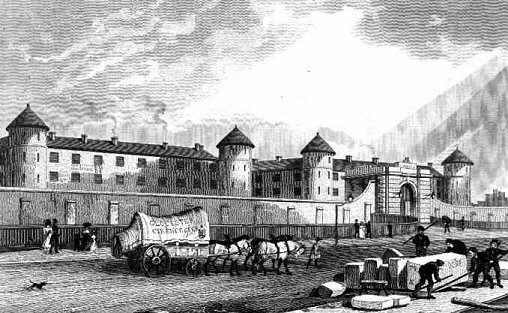
by Thomas Hosmer Shepherd, 1829.
Initially the departure was delayed because of severe weather in the English Channel. Dr Bowman reported in the Surgeon’s Journal for the voyage that when the prisoners left Millbank
‘…they were in good Health, but a few Cases of Cholera had occurred in Millbank Penitentiary on the male side, tho none had as yet appeared amongst the Females. Cholera also at the time was prevalent on Board the Hulks, near which the Cadet lay moored at Woolwich. Whilst at Woolwich diarrhoea frequently occurred amongst the Prisoners, but it was not of a nature to create any alarm and I at that attributed it to change of Diet.
The Cadet was still in the Plymouth Sound on 22 November when a female prisoner, Mary alias Margaret Farrell6, came down with cholera. She died the following day. Mary Hughes7, a pregnant prisoner, fell ill with cholera on the 23rd. She gave birth to a seven-month infant on the 25th and died the following day. No mention is made in the journal of the fate of Mary’s child but being born at around thirty-two weeks, it is unlikely to have survived for long. A third woman, Sarah Prosser8, presented with symptoms on the 30th and seemed to be recovering but took a turn for the worse on 4 December. She died of a reactive fever following the cholera on 7 Dec 1848. In the period before the ship put to sea, two prisoners came down with cholerine/choleraic diarrhoea, a milder form of the diarrhoea associated with cholera, and seventeen others with ordinary diarrhoea. Jane Whitton suffered from diarrhoea from 11 December to the 21st, when she was declared cured. The cholera on the Cadet took place in the early months of Britain’s second large cholera epidemic. Over 1848 and 1849 it would kill 62,000 people with 13,565 in London alone. This was the epidemic where Dr John Snow concluded that cholera was a waterborne disease.
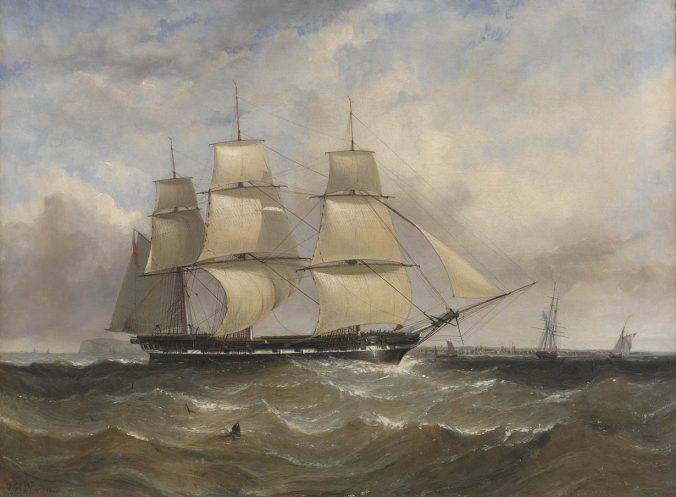
by William Adolphus Knell, 1840.
I was unable to find a picture of the Cadet.
Finally, the Cadet began its voyage to Van Diemen’s Land on 17 December 1848. In the space of six months since her trial, Annie Miles had gone from being a spirited woman who knew how to live by her wits in a growing industrial town to a prisoner whose life was rigidly controlled by others who was facing a perilous sea journey of four months and permanent exile in a strange country on the other side of the world.
When the Cadet reached the tropics there was an outbreak ‘synochus bilious fever’. This fever can be accompanied by headaches and pains, vomiting and, in more serious cases, difficulty in breathing. Synochus was usually treated with a combination of rest and modified diet. Annie was listed as suffering from synochus for four days from 31 January 1849. It was the most common illness on this journey with thirty-four women suffering from it; the next most common was ordinary diarrhoea with twenty-four cases. In all seven prisoners died on the voyage and two children, a brother and sister.9
After 115 days at sea, the Cadet arrived in Hobart on 12 April 1849.
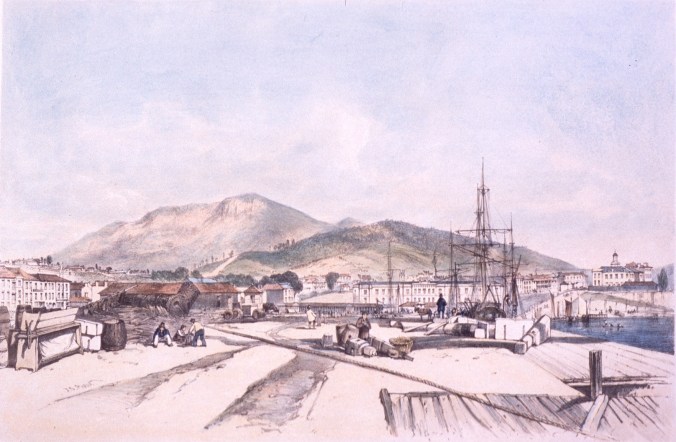
Published by Thomas Bluett, 1844.
Courtesy Libraries Tasmania
Annie’s story continues in my next post: Hannah Miles ~ Life in Van Diemen’s Land.

- In most formal records she is recorded as Hannah but Ann was used in newspaper reports in 1855 and on admission to hospital that year. She was admitted to the Hobart Hospital in 1869 as Annie, the name that knew her best most likely used, here in Australia at least. ↩︎
- I am certain that this marriage is of Annie’s father to Mary Orton although there is no marital status recorded in the Marriage register. I, my sisters and an aunt all have DNA matches to descendants Annie’s half-siblings. ↩︎
- Cat Yard was not far from Rollinston Court where Hannah had been living earlier in the decade. ↩︎
- The Quarter Sessions Calendar of Prisoners gives the date committed as 23 June 1848 ↩︎
- Image Attribution: H. M. Prison, Stafford by John Lord licensed under the Creative Commons Attribution-Share Alike 2.0 Generic license. ↩︎
- Mary alias Margaret Farrell, 24, had been tried at Warwick on 29 March 1848 and sentenced to seven years transportation for stealing from the person. ↩︎
- Mary Hughes alias Elizabeth Hanratty, 38, had been tried at Chester on 26 Jun 1848 and sentenced to seven years transportation for receiving stolen money. ↩︎
- Sarah Prosser, 30, had been tried at the Central Criminal Court (Old Bailey) in London on 15 May 1848 and sentenced to seven years transportation for several thefts. She brought her child with her. The child was subsequently adopted by another prisoner, Susannah Owens. Unfortunately, this was probably only for the length of the voyage. On arrival the child would most likely have been sent to the Orphan Asylum. I have been unable to trace this child. ↩︎
- All information on the voyage is from the ‘Surgeon’s Journal of Her Majesty’s Female Convict Ship “Cadet”’. The Journal in its original form can be found on Ancestry. A transcription is available by courtesy of the Female Convicts Research Centre. https://femaleconvicts.org.au/convict-ships/convict-ship-records ↩︎
_________________________________________________________________
©Catherine Anne Merrick.
Unauthorized use and/or duplication of this material without express and written permission from this blog’s author and/or owner is strictly prohibited. Excerpts and links may be used, provided that full and clear credit is given to Catherine Anne Merrick and https://catherinemeyrick.com/ with appropriate and specific direction and links to the original content.
_________________________________________________________________
 Catherine Meyrick
Pingback: Hannah Miles ~ Life in Van Diemen’s Land | Catherine Meyrick