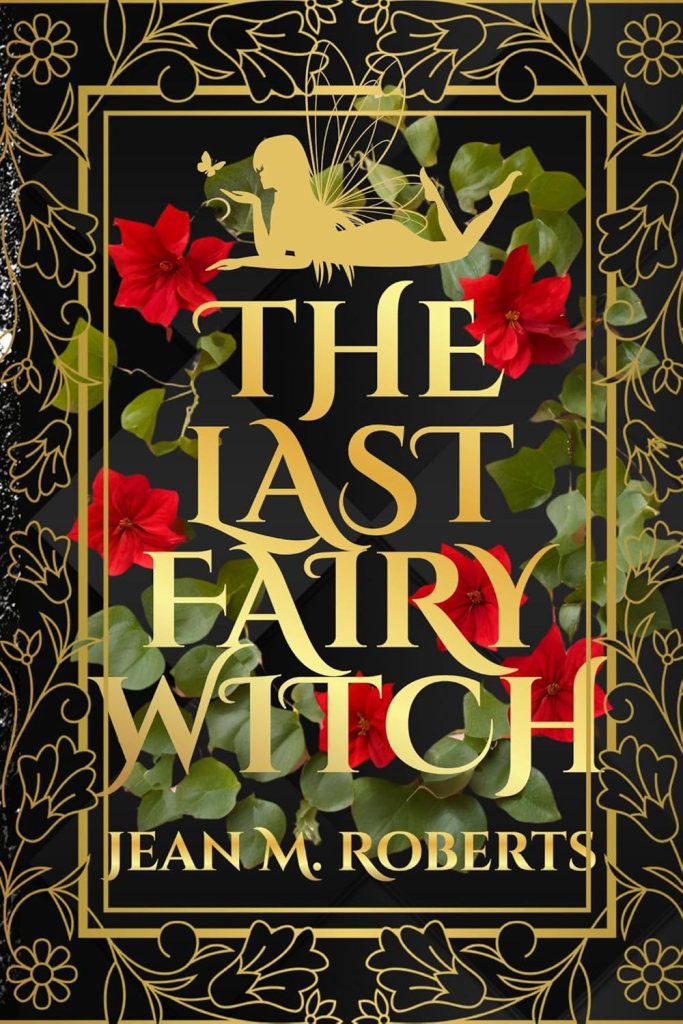
Blurb
Hannah Heronstone appears to have everything—a devoted husband, a beloved child, and a thriving business built on ancient herbal knowledge. Yet beneath the calm surface of her life, something old and malevolent stirs. A disturbing encounter with a friend from her husband’s past awakens Hannah’s suspicion that a coven of dark witches is gathering near Wentworth Manor. When Hannah, Peter, and Johannah journey to Ireland, her fears take terrifying form as she comes face to face with an unspeakable monster. A fairy offers her aid—but in a land where truth is slippery and magic demands a price, can such a creature be trusted? And where, across legend and time, can she find the Last Fairy Witch?
Centuries earlier, Eithne is a young Irish slave whose gift for healing marks her as something more. Trained by a druid, her growing power cannot be hidden for long. Sent to the sacred stronghold of Rathcroghan to become a Bandrui, Eithne finds herself caught between two suitors—a gifted bard and a handsome prince—while a darker force watches from the shadows. A ruthless witch who will stop at nothing to destroy her.
Separated by centuries but bound by magic and fate, Hannah and Eithne must each risk everything to confront the darkness rising in their worlds. To save those they love, they must cross through time itself—or lose all they hold dear.

Review
A thin mist rose from the ground, shrouding the sentinels in a ghostly veil. It was a sacred space, a place of worship and ritual, a place from another time. Surrounding the ring was a dense wall of oak trees, hundreds of years old, shielding it from the eyes of a casual observer. Somewhere in the distance, a river splashed over rocks, tumbling down a waterfall into a crystal-clear pool.
Overhead, the harsh cry of a raptor sent a shiver down Hannah’s spine. Death and beauty.
So begins The Last Fairy Witch, Jean M Roberts’s latest historical fantasy novel.
Hannah Heronstone has stepped into the centre of the ancient standing stones on her husband’s Devon estate. Passing through the mist to a time when the stones stood upright, she is greeted by a young woman whose ‘gown was snowy white and beautifully embroidered as was her cloak of forest green’. She introduces herself as Eithne ni Domnall, a bandrui, a female druid and prophetess. She recognises Hannah as a Midsummer Woman, one of a centuries-old sisterhood of cunning women. Eithne warns Hannah,
‘There will come a day, my friend, when we shall need each other. I shall answer your call when it comes.’
The scene is a taste of all that will follow: the beauty of the natural world, magic, travel into the distant past, and slowly building threat.
The Last Fairy Witch is the third book in The Women of Midsummer series and continues Hannah’s story. Like the two earlier books, it is told in two timelines.
Hannah’s modern life is idyllic. Her herbal medicine business is thriving; her husband is devoted to her; her daughter Johannah is now at school. Johannah is another Midsummer Woman and Hannah has a dual task, not only providing a mother’s care, but teaching Johannah to control and use her magic wisely. When Hannah’s archaeologist husband, Peter, accepts the job of surveying his friend Roger’s estate in Ireland, not far from the megalithic Rathcroghan Mound, she and Johannah travel with him. Hannah is disturbed to find, staying with Roger’s family, the sister of one of a coven of dark witches operating near Hannah’s home. Roger’s house itself appears to be haunted, not just with ghosts but with a touch of evil.
Eithne is a thirteen-year-old girl in fifth century Ireland who, because of the family’s poverty, is handed over as a slave by her family to a druid in exchange for two cows. The druid recognises Eithne’s nascent and untrained powers and takes her to his home in the walled settlement of one of the regional kings of Connacht. We folloe Eithne as the druid teaches her the cultivation and uses of herbs and tries to help her control her magic. He realises she needs someone more knowledgeable than he is so, at sixteen, she is sent to Cruachan, the seat of the king of Connacht, to be trained as a bandrui, something almost unheard of for a slave. As well as the challenges of her studies, Eithne has to deal with the malice of a high-born trainee bandrui and to navigate the interest of a young bard she has known since childhood and the more demanding attentions of an entitled and battle-hardened prince.
Initially Hannah follows Eithne’s life through dreams and visions but when an old dangerous evil is let lose, Hannah and Eithne must join forces to defeat it and save those they love and all they hold sacred.
In The Last Fairy Witch, Jean M Roberts vividly recreates life in fifth century Ireland with beautifully detailed descriptions of the physical environment and the Celtic settlements, the roles of bards and druids, the use of herbs and spells, as well as the ancient beliefs and way of life. Irish words and terms are interspersed through the text but clearly understandable in their context. Characters are well-rounded, even the more minor ones in both time periods. The two timelines are evenly balanced, each one as compelling as the other.
The atmosphere of danger slowly builds from the shiver of the raptor’s cry on the first page, through the stench of black magic to the steadily growing threats from the rising dark forces. If you have an overactive imagination, as I do, I would not recommend reading this novel last thing at night if you are the only one still awake in the house.
Just like the other books in The Women of Midsummer series, this novel is immersive and more than spine-tingling—an absolute page-turner and well worth reading.
The Last Fairy Witch can be read as a stand-alone novel, but for the greatest enjoyment I would recommend reading the books in order.
 Catherine Meyrick