
Photographer: George & George’s Federal Studio
The use of the term crowning glory to describe a woman’s hair has been around since the middle of the nineteenth century. As the Albury Banner and Wodonga Express put it, ’Whether the locks be golden-hued or ebony, one of the greatest gifts of the Creator to women is, undoubtedly, a beautiful head of hair’.1
A beautiful head of hair during this period meant, invariably, that the hair was long, occasionally below waist length. Unlike the anachronistic covers of so many historical novels, it was rarely seen loose but was pinned up, sometimes arranged into complex coiffures.
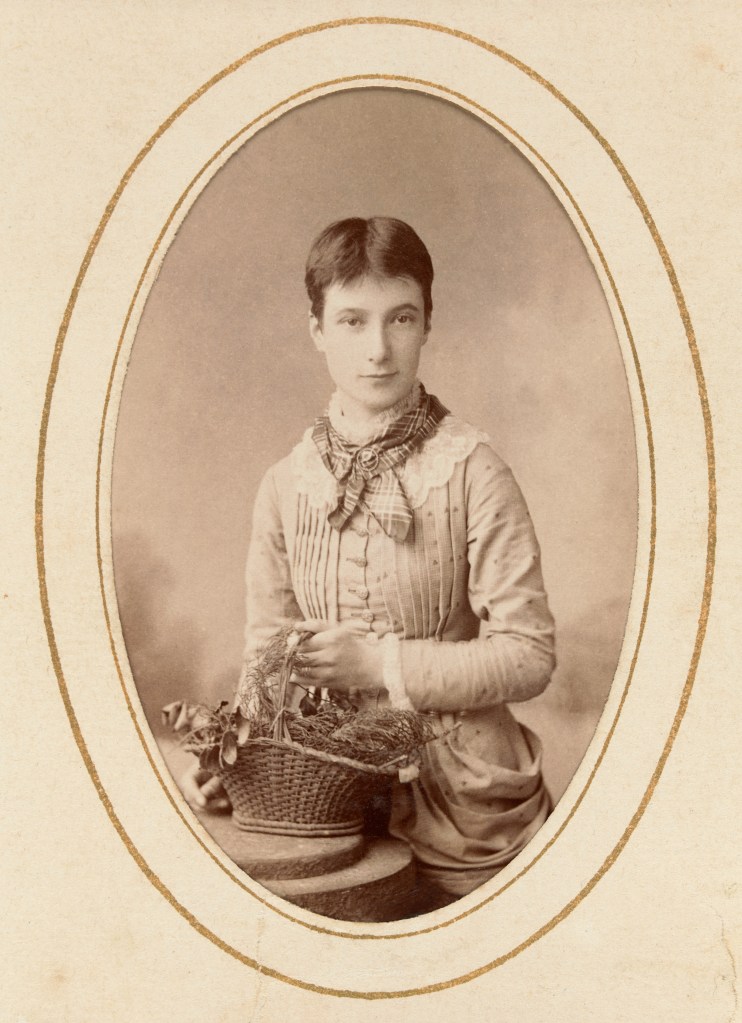
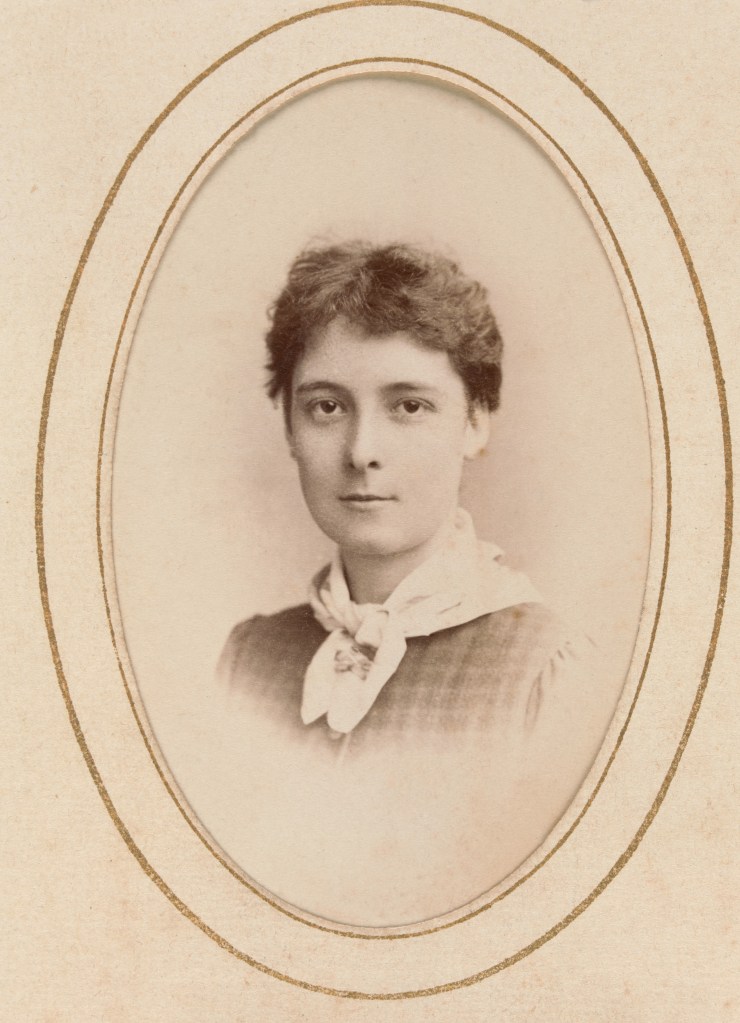
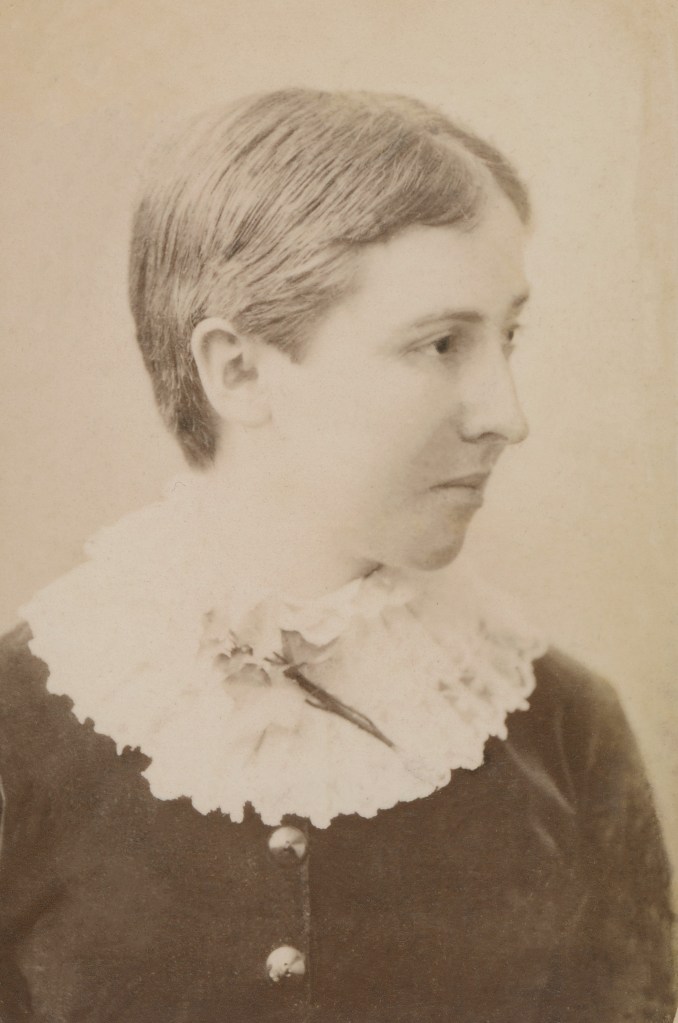
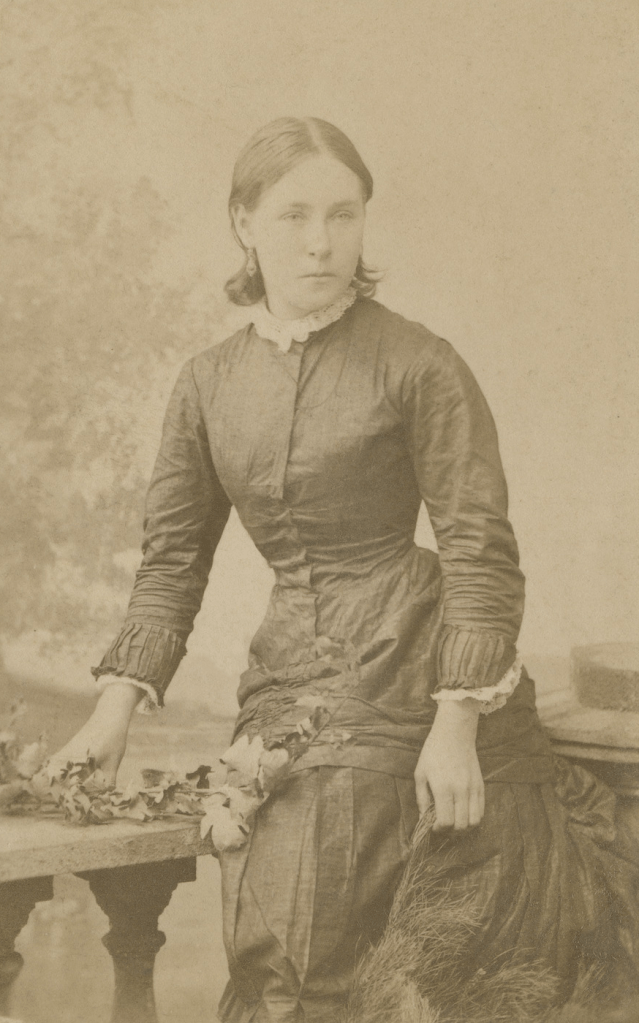
It was interesting then to discover, as part of my research for my novel Cold Blows the Wind, when I was trawling through library collections of nineteenth century cartes de visite that there were quite a number of photos of women with cropped hair. In the late eighteenth century, around the time of the French Revolution, the short Titus cut had been fashionable but I was looking at photographs from the 1870s and 1880s. The photographs were of respectable ordinary women, not prisoners of any sort.2 The fact that they could afford to have a photograph taken also suggests that the hair was not cut off to be sold, as poor women sometimes did. The most probably reason for the short hair was that these women had been ill with a fever of some sort. The cutting of hair was often used as a way to help with lowering fever in patients of both sexes.
‘If the head becomes hot and delirium threatens, the hair should immediately be shaven, the head moderately elevated, and kept cool by damp cloths, often renewed, or by ice in a bladder.’3
It is clear too, from these photographs, that such short hair was not a thing of shame. If it were, it is unlikely that they would have been willing to sit for the photographer without a head covering of some sort. Perhaps, having come close to losing the women in the photographs, families wanted a permanent reminder of them in a similar way to the men who commissioned portraits of their pregnant wives in the late sixteenth and early seventeenth centuries.
Below are a few of the photographs I found in the collection of the State Library of Victoria. I think, from my twenty-first century point of view, all the women look quite smart with their short hair, proving that hair does not need to be long to be a crowning glory.
Photographer: Johnstone, O’Shannessy & Co
Photographer: Johnstone, O’Shannessy & Co
These are most probably two sisters. The photographs are from Annie Hamilton’s photographic album held by the State Library of Victoria.
Photographer: Stewart & Co, Melbourne

Photographer: S Spurling, Launceston

Photographer: Turner & Drinkwater, Hull

Photographer: Duval & Co, Launceston

Photographer: unknown
Photographer: E.C. Waddington & Co, Melbourne
Both these young women appear to be growing their hair after it has been cropped.

Photographer: D E Woods, South Melbourne
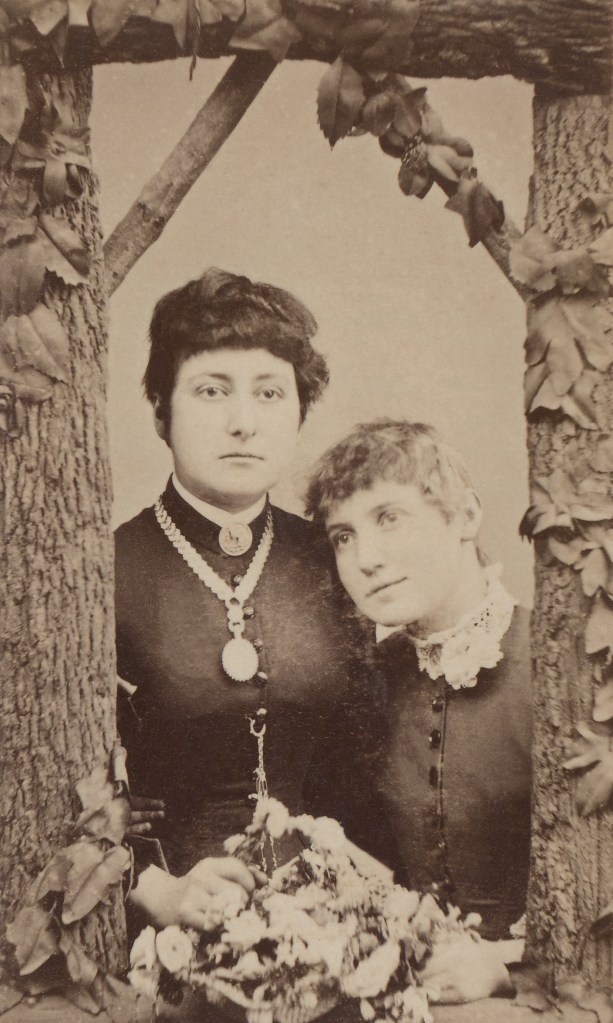
Photographer: Alfred Winter, Hobart
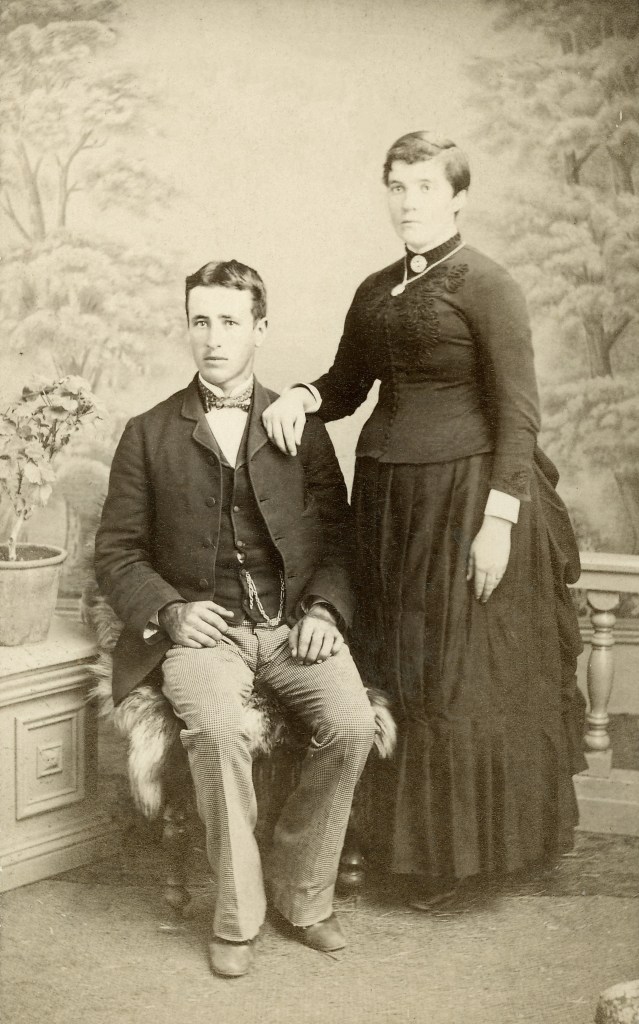
Photographer: Henry Jones, Adelaide

Photographer: R. Duryea & Co
All photographs in this post are courtesy of the State Library of Victoria and are in the public domain.
This is the first in an irregular series I will be posting based around the photographs of ordinary people, often unidentified, that I have found in various State Library collections.
_____________________________________________________________________
- Albury Banner and Wodonga Express of 3 April 1896 p.12, c3 ‘A Woman’s Crowning Glory’ ↩︎
- In the early part of the nineteenth century female prisoners routinely had their hair cropped but this had been discontinued by the middle of the nineteenth century. The Hobarton Mercury Wed 10 Jan 1855 p.2, c4 ‘Insulting Treatment’ ↩︎
- Australian Town and Country Journal Sat 18 May 1878 p.22, c1 ‘Common Continued Fever’ ↩︎
 Catherine Meyrick
Beautiful post and such an interesting glimpse into the past.
LikeLiked by 1 person
These photos are such an amazing resource. Finding so many with short hair was such a surprise. It’s interesting, too, to see the way ordinary people dressed, how they decorated themselves in the absence of lots of jewellery. I hope to post more photos later in the year.
LikeLike
Wonderful job, Catherine.
LikeLiked by 1 person
Thank you. I love these photos – such a wonderful glimpse into the past.
LikeLike