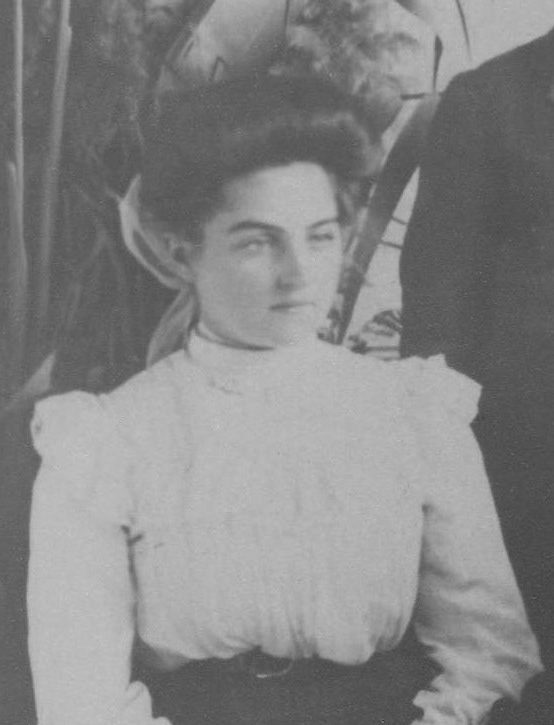
Aged 16
My grandmother grew up on her father’s farm at Valencia Creek in Gippsland, situated beneath the foothills of the Great Dividing Range and Mount Wellington. Her father, William O’Connor, had been born at Thebarton in South Australia in 1847. His parents, Patrick Connor and Mary White had migrated to Australia from Killarney in 1840 and by 1858 were farming at Pine Creek near Saddleworth. Patrick died in 1865 and William continued with the farm there.
Following his marriage to Sarah Ann Watson (b.1861 at Robe, South Australia) at Millicent in 1880, William and Sarah moved to Gippsland, initially living in Thompson Street, Sale. Family lore says that they moved to Victoria later in the year of their marriage but I have found nothing to confirm it so far. William and Sarah were definitely living in Sale by May 1882 when their first child, Mary, was born. In mid-October of that year William bought 32 acres at Valencia Creek, the forfeited selection of a W Murray. He was also approved to lease a further 40 acres. Later he would increase the size of the farm with other parcels of land.

early 20th century
It is unclear when William and Sarah and their children actually went to live at Valencia Creek. In 1887 Sarah put an advertisement in the newspapers attempting to trace her father, William George Bowden Watson and the eldest of her brothers; in it she gave her address as Thompson Street, Sale. William would have been clearing his land by this time, although he was also working as a carrier. He was still calling himself a carrier when my grandmother, Catherine, was born at Valencia Creek in January 1889, though by September 1891, when his first son John Joseph was born, his occupation was farmer.
My grandmother was not much of a storyteller so only scraps about their lives have been handed down to us. She said that her father at one stage was bringing a bullock train through northern Victoria and was making camp just on dusk when a man rode up and asked if he could share the fire. Of course, in the spirit of bush hospitality, William agreed. After eating and sharing a billy of tea, they turned in for the night but by daylight his visitor had gone. He had given William the sense that he was a man on the run. When he arrived in the next town, William discovered that the man who had camped with him was Dan Kelly.1 My grandmother also said that her parents travelled to Gippsland from South Australia by bullock wagon. Her mother, Sarah, was so terrified by the size and the noise of Melbourne that she took fright and hid in the wagon until they were through the city. There is a single photo of farm buildings (above) but my grandmother said that the washhouse was by the creek in a large hollowed-out tree trunk. And we gain just a glimpse of life on the farm in her story of a day by the creek, her father telling them all that there was nothing better to drink than the pure creek water, scooping up great handfuls and drinking them down. Not long afterward he found, half a mile upstream, a cow dead in the creek. Nearly seventy years on Nanna was still laughing about it. By all reports William was a hardworking and mild-mannered man and Sarah a woman with a great sense of humour and a love of cats.

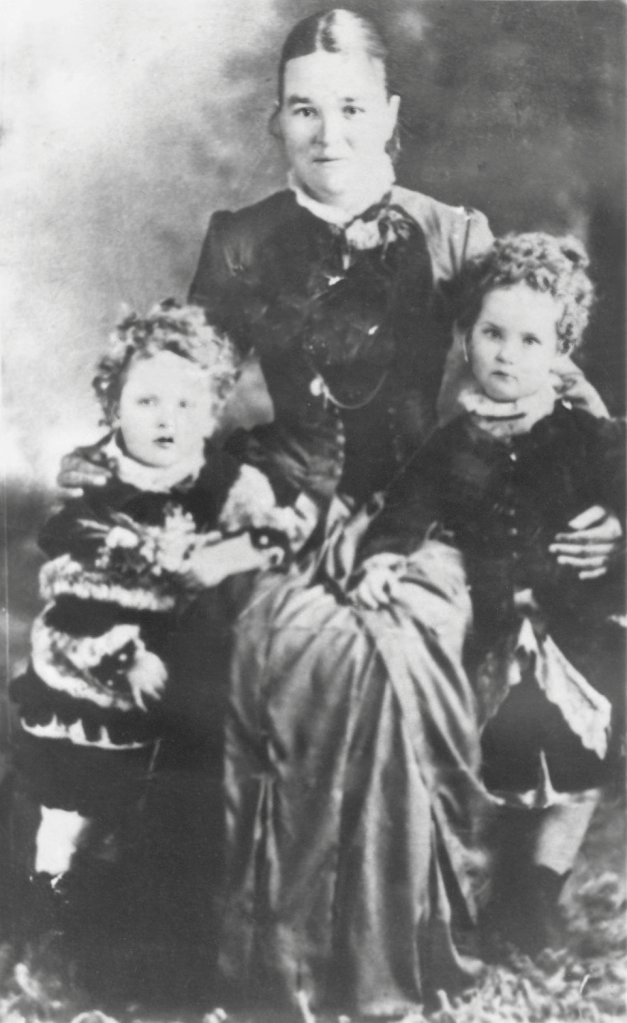
It is not a great deal to remember two lives by so I was delighted, a while back, to discover a series of letters written by the younger O’Connor children and published in ‘The Young Folks’ pages of The Weekly Times between 1906 and 1914. The Weekly Times, first published in 1869, is Australia’s oldest rural newspaper, publishing on all manner of topics of interest to farmers and those living in the country. The children’s pages encouraged children to write in with stories about their lives.
The first letter was written in mid-1906 by John Joseph O’Connor, then aged fourteen, and briefly described life on the farm. It does give a sense of the remoteness of rural life.
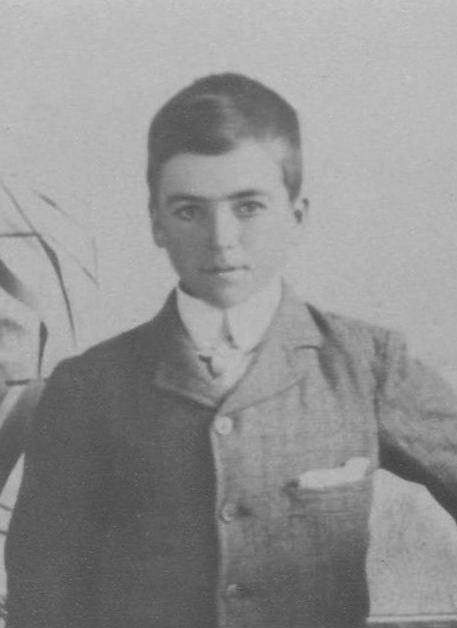
Aged 14
Valencia Creek is only a small place. The nearest township is Briagolong, and it is ten miles from here. … We are milking seven cows at present … We have just finished our maize picking, and the crops were very good around here this year. We have a nice vegetable garden every year. My father is very busy ploughing now to put in his crop. All the crops look nice and green around here. We have five horses and thirty-eight head of cattle. There is plenty of water in the paddocks for the cattle now, but in the summer we have to drive our cattle to the creek for water. There is a creek running by our place named Valencia Creek. We had a football match here last Saturday, and we are to have another match in a fortnight. We have to go six miles for our mail.
Weekly Times Sat 23 Jun 1906 p.27
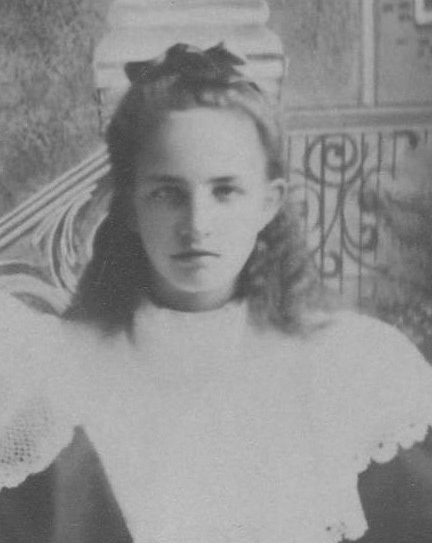
Aged 11
John’s sister, Margaret Agnes aged twelve, had a letter published one month later.
It is a very hilly place around here. There are some lovely fern-trees and maiden hair fern in the gullies, and they look very nice in Springtime. My favorite flowers are violets, roses and pansies.
Weekly Times Sat 21 Jul 1906 p.26
For a number of years Margaret was the main letter writer. She had a love of flowers and often mentioned them in her letters, as in this letter written nearly a year and a half later.
The weather is very dry at present and it is very windy. It has been windy these last few weeks … We are getting a lot of eggs every day, and my little brother [William, aged 4] always brings them in from the nest. … We have a nice flower garden, and there are a lot of young plants coming up, and some of the flowers are in bloom. The wild flowers are coming out in bloom also. There is a nice flower in the bush, called the bell-creeper. It comes out in a bell shape, and the color is red and cream, and it creeps over rocks or scrub. When in full bloom it looks beautiful.
Weekly Times Sat 23 Nov 1907 p.37
Despite the distance between farms, there was still the opportunity for social activities. Margaret’s next letter published in March 1908 talks of the sports day held on New Year’s Day.
It has been very misty and cold these last few days. Our crops are looking well since the last rain, and the maize is up in rows. … New Year’s Day I enjoyed myself very well because a lot of my schoolmates were there from Valencia Creek. I did not go in for any races, because I was too hot. After we left the sports we had to drive 10 miles. We got home about six o’clock. …Our flowers are still out in bloom. We have a nice lot of pot plants and some of them are out in bloom. I think the fuchsia is a lovely pot plant. We have three fuchsias, and when they are out in bloom they look lovely. We also have a nice lot of violets. I love the smell of sweet flowers. … We have a number of chickens, and also fowls. My sister has two little white ducks, and she takes great care of them.
Weekly Times Sat 7 Mar 1908 p.37

Aged 21
Two years on Margaret talks again of the sports on New Year’s Day and of a picnic.
Christmas has gone past once again, and the holidays are nearly all over. Christmas Day was very warm, but I enjoyed myself. In the evening my three sisters [Joanna 11, Catherine 22, and Elizabeth 26] and I went down for a bathe in the river. …After we had tea my brother started the phonograph and we had a good time. … I went to the Boxing Day picnic; also the sports on New Year’s Day. It was not so hot on New Year’s Day as it was on Boxing Day. On New Year’s Day we stopped till the sports were all over, and came home in the cool of the evening. … The harvesting is nearly all over now. The crops of hay this year have been very good. Some people have from three to five stacks of hay. The paddocks looked very dry looking a while back from the heat. The temperature was up to 104 in the shade, but it is quite different now, because these last few days have been continually misty rain. The rain will do the root crops a lot of good; also the grass paddocks.
Weekly Times Sat 5 Feb 1910 p.37

Aged 7
About this time Margaret’s eleven-year-old sister Joanna, known as Hannah, began writing too about life on the farm and their surroundings.
Everything looks nice and green about Valencia Creek since the rain. Our potatoes have been very good, this year. Father has them all dug out now, except the late ones, which are coming on splendidly. We have a lot of maize in this year. Some of the maize has from one to two cobs on them. The harvesting about here this year has been very good. Father had a very good crop. We are milking eight cows, and feeding seven calves. There is one little calf about six weeks old and I like feeding it. It is so quiet. Sometimes I milk three cows. After the cows are milked, I take them away to the paddock. I am learning to ride now. Our vegetable garden looks lovely since the rain. We have a good few cabbages. The grapes are just starting to get ripe. Our flower garden is looking beautiful. There are a lot of seeds just coming up. My favorite flowers are violets, roses, snapdragons, forget-me-nots, dahlias, and, honeysuckle.
We went out fishing one day and followed the river up for about a mile but the fish did not bite very well. Along Valencia Creek there is some nice scenery to be found. There is only one big cave about 36 feet high. When you are on the top of it you can see the water, and it looks such a tremendous depth The wombat builds its nest under this cave, and when the dogs are near; it makes such a funny noise. The little swallows build their nest in the crevices of these rocks; also other kinds of birds. Just along the edge of the river there are a lot of nice young ferns, and up further from that there are great big cliffs of rocks, and sometimes when you get on top of them and look over, you may see flocks swimming about.
Weekly Times Sat 19 Mar 1910 p.42

Photographer: J A Waugh
Courtesy State Library of Victoria
Later in the year Margaret wrote again adding more information about the tasks undertaken on the farm.
Our oats are coming on splendidly. We feed our cows on one oat paddock and we are keeping the big paddock for hay. Last year we had a great crop of hay and I hope we have the same this year. Last year there were great crops of hay about the district. We have some potatoes in now and are going to put some more in later, also maize. We have a good vegetable garden coming on. We are milking twelve cows and separate the milk and send it to the Boisdale Factory. We have eight little poddy calves, and they are in good condition now as there is young grass springing up everywhere. In winter we can see the snow away back on the mountains. It must be very cold back there. The fruit trees are coming into bloom now.
Weekly Times Sat 22 Oct 1910 p.39
In December of 1910 Hannah wrote a lengthy letter describing the seasons –the shorn sheep and the snakes in the heat of summer.
The nights are sultry, snakes crawl about the rivers or near scrubby places, or even out on the clear ground; also amongst high grass. I do not care [for] snakes. I am very frightened of them.
Then there are the changes that autumn brings.
The grass is now going off, and the cattle are not very fat. The cows do not give so much milk. They gradually go off as Winter is coming.
And winter.
The weather is cold, wet and frosty. The mountains are sometimes covered with snow. The ice covers the still waterholes.
Hannah then goes on to describe winter evenings spent in front of the huge fireplace with seats at each side in the O’Connor homestead.
You can sit around the big fire and hear father telling amusing stories after his day’s work is done, and hear the wind howling outside, and the rain pattering on the roof. Little children are happy by the side of the fire.
Finally she describes spring – the fruit trees in new leaf with parrots flying among them, the cherry trees and plum trees white with blossom, the paddocks of young green corn.
The hills are lovely with flowers. The everlastings that shine above the grass and the little white Spring flowers appear. … The cattle are fat and the cows milk very well. Spring is the best season for milking. There is green feed wherever you look, either on the roads or in the paddocks, plenty of water everywhere … Our flower garden looks beautiful at present, also our vegetable garden. I think we will have a good few grapes this year. We have a lot of little chickens and two little magpies. We have a lot of maize in this year.
Weekly Times Sat 31 Dec 1910 p.40

Photographer: H B Hammond
Courtesy National Library of Australia
One of the last letters I could find from Hannah is from February 1914 when she was fifteen and describing the animals on the farm with the no-nonsense attitude of a farmer’s daughter.
Some of our cows are very quiet. I can milk them out in the yard, and they stand still till they are milked. When a young cow comes in with a young calf she is very wild. The little calves are very wild, in the hills and when they see you they will bellow and their mother runs up to them. When the cows are all milked we take the milk into the dairy and separate it, and the cream is sent away to the factory to make butter. There are some very wild cattle out in the hills, and when they see you they will run away and plant in the scrub. People put cattle into the paddock to fatten them, and they are sold to the butcher to be killed for meat. Some cattle are sent to Melbourne. Little pigs are pretty, but when they grow up they are very ugly. If you go near the pig yard when they are hungry they will put their front feet up on the fence and they think you have food for them. A number of pigs are fattened and sent to Melbourne in trucks. Some pigs bring a good price. Some dogs are very useful for bringing the cows in the yard. … Dogs are very good to keep foxes away from the fowls … In summer all the sheep have to be shorn, as it is too hot to keep their wool on. The wool is sent away, and becomes of great use. We have not many sheep, but there is one pet among them all and she is about nine years old. When lambs are small they are very playful. We have a few lambs up in our paddock, and we can see them jumping on logs and skipping along the ground. There can be more sheep put in a paddock than cattle. …. There are many wild animals in the bush. The kangaroos are very wild. When they see you they will run away, and if they come to any fences or logs they will jump them quite easily. Kangaroos can go very fast. When dogs are chasing them you can hear their tails thumping on the ground. The wallaby is something like the kangaroo. There are a good number of foxes in the bush. At night you can hear them barking. They make such a funny noise. If there is not a dog at the house, they will come right down and get the fowls but when the dog is barking it keeps the foxes away. Fox skins are very useful for making mufflers.
Weekly Times Sat 28 Feb 1914 p.7

Photographer: H B Hammond
Courtesy National Library of Australia
Hannah’s final letter in July 1914 shows the beauty of the area where they lived. After describing summer thunderstorms, she says
Summer has its joys. You can go in bathing or go for a row in the boat. It is very nice to go along the creek for a picnic in the summer. You can sit under the lovely cool shades along the creek, or go fishing. There are many wild flowers along the creek, and you gather a nice bunch. There are some very big rocks and caves along the creek, and there are some tree-ferns which grow very high and then spread their leaves. They look lovely growing near the rocks and caves. In summer the cattle generally gather along the creek, lying in the cool shades. You have to be very careful where you walk in summer on account of snakes. There are two kinds of snakes the tiger and the black snake. After the summer is over the snakes go to sleep, and do not come out till the following summer … It is very nice to go out under the verandah and listen to the birds singing in the early mornings. The summer evenings are very long, and it does not get dark until 8 o’clock.
Weekly Times Sat 11 Jul 1914 p.39
It was absolutely wonderful to find these letter and gain a far better idea of the place where my grandmother grew up and the life she lived – a life sometimes lacking the many thrills and activities townsfolk took for granted but it was not a lonely or boring life.
These letters contain far more than the descriptions of the farm, the O’Connor children talk of their time at school, their pets as well as describing the threats from bushfires and floods. Post on these other aspects of the O’Connor family’s life at Valencia Creek can be found here.
_________________________________________________________________________________________
- Doesn’t every Victorian whose forebears were here in the nineteenth century have a Kelly story? ↩︎
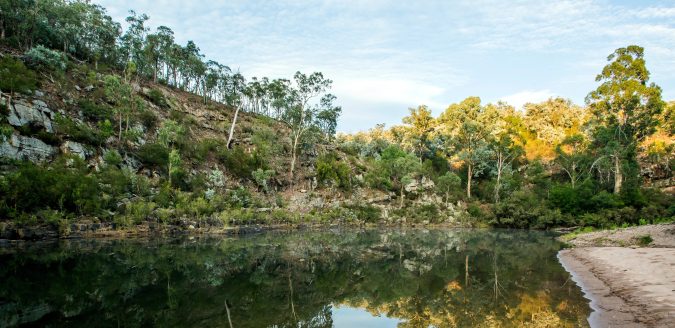
The Valencia Creek feeds into the Avon River.
 Catherine Meyrick
You have some lovely family photos here, given added interest with the letters you’ve found.
LikeLiked by 1 person
Thank you, Graham. I’m lucky that my mother and grandmother kept so many. I like be able to see what they all looked like.
With these long wordy posts, they help in breaking up the text too.
LikeLiked by 1 person
Pingback: The O’Connors of Valencia Creek – School Days | Catherine Meyrick