Every story has a beginning, an opening line. With some novels that the first sentence contain resonances for the whole novel, echoes or hints of what will come. Others reveal their themes slowly, line by line, over the first few paragraphs. Whatever the style of opening, the best offer a tantalising invitation to read on.
I looked recently at half a dozen books that I love to see how they began. Two definitely had openings which resonated with the theme of the whole book, another built the resonances slowly through the short first chapter. The remaining three open more quietly but still engagingly. I have included the first two sentences of all these because I think adding the second gives a better sense of the author’s style
I would recommend all these books wholeheartedly. The titles contain links to reviews of the books in question; with all but A Month in the Country, the reviews are my own.
The Good People by Hannah Kent
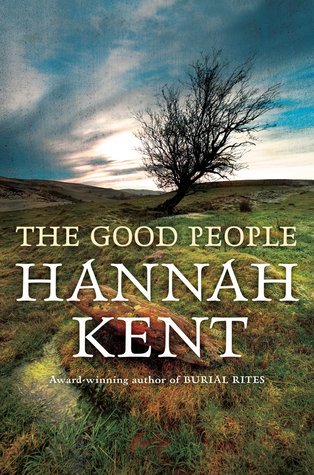
Nóra’s first thought when they brought her the body was that it could not be her husband’s. For one long moment she stared at the men bearing Martin’s weight on their sweating shoulders, standing in the gasping cold, and believed that the body was nothing but a cruel imitation; a changeling, brutal in its likeness.
This beginning hints at much of what will follow. It quickly and realistically imagines life in rural Kerry in the 1820s. The novel follows three women in the aftermath of Martin’s death. Nóra Leahy has care of Micheál, the four-year-old son of her dead daughter, who was a healthy boy until he was two but can no longer walk or talk and has no control of his bodily functions. The other women are her servant girl Mary, and Nance Roche, a bean feasa or wise woman, who helps Nóra seek answers for Micheál’s state. The Good People is beautifully written in lyrical prose replete with Irishness—a great read that totally immerses the reader in another time and place.

Ancestry by Simon Mawer
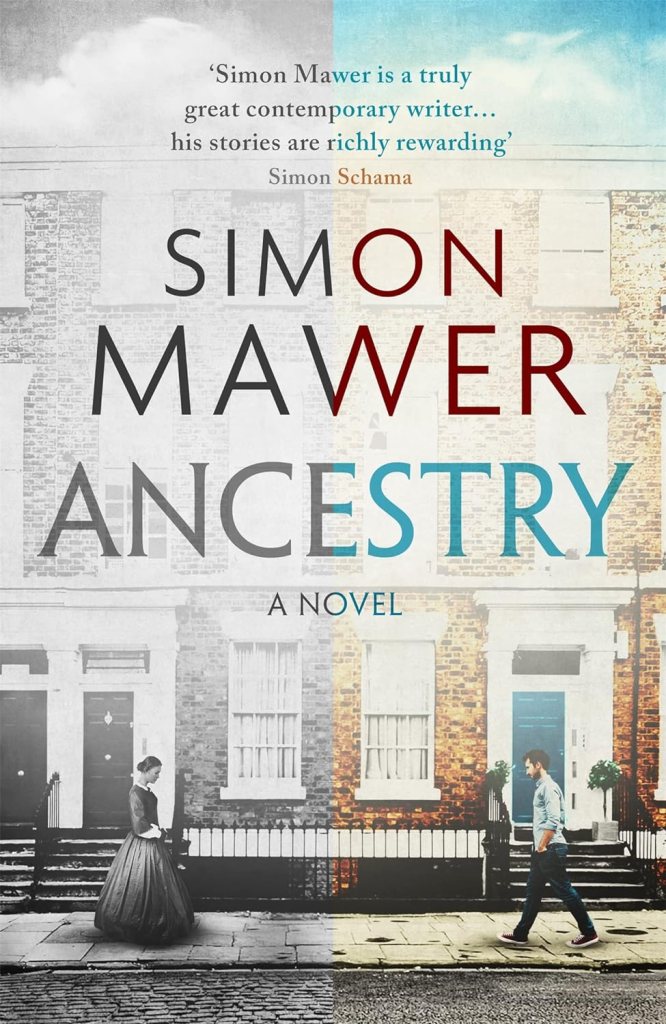
This novel begins with a short preface that should not be skipped over as it leads into what the author creates in the remainder of the book.
What is the past? I don’t mean personal memory – I mean the distant past beyond lived experience. History is the way the past is told, an altogether different thing. But what is this past? In what does this consist?
Mawer then goes on to talk of the traces of the past – DNA, family stories, letters, documents and artefacts and ends the first page with more questions.
A past that only consists of the artefacts is like a skeleton unearthed in an archaeological dig. Where is the flesh and blood? Who were the people? What did they feel? Where have they gone?
The novel puts flesh and blood on the artefacts that remain of the lives of two sets of Simon Mawer’s great-great grandparents. Struggles and sorrows as well as moments of joy and achievement are brought to vivid life in a meticulously researched past world. And, at moments, Mawer draws aside the curtain to show the slim documentary foundations upon which fictionalised lives are often based. He ends the novel beautifully, still musing on the past.
‘It is only through those remaining fragments – an entry in the census, a birth or a death certificate, the occasional relic passed down through the generations – that they can be perceived. Yet they lived and loved, cried tears of pain and laughter, slept and dreamt, awoke and ultimately died. We know because those are the attributes of being human; the rest is intuition.’
Ancestry was long listed for the Walter Scott Prize for historical fiction. It is, to my mind, an absolutely brilliant novel.
Foster by Claire Keegan

Early on Sunday, after first Mass at Clonegal, my father, instead of taking me home, drives deep into Wexford towards the coast where my mother’s people came from. It is a hot day, bright, with patches of shade and greenish, sudden light along the road.
Foster follows a withdrawn, over-looked nine-year-old girl sent, over the summer holidays of 1981, to spent time on the farm of older relatives of her mother’s. Keegan’s spare, lyrical prose paints a realistic world with great emotional depth. The beginning is not startling but each sentence gently adds something to the world of the novel so that within two pages we have a sense of the characters of the girl, the older couple and the girl’s feckless father. And while we have no real sense of what will happen next, there is a tension present that draws the reader on to learn more.
This is a novel that asks for a second reading, and a viewing of the Irish language film adaptation, The Quiet Girl / An Cailín Ciúin. (The trailer for the film is in the review linked to in the title.)
The Women in Black by Madeleine St John

At the end of a hot November day Miss Baines and Mrs Williams of the Ladies’ Frocks Department at Goode’s were complaining to each other while they changed out of their black frocks before going home.
‘Mr Ryder’s not so bad,’ said Miss Baines with reference to the floor manager; ‘it’s that Miss Cartwright who’s a pain in the neck, if you’ll excuse my French.’
The beginning of this novel sets time and place firmly among women working in a department store in Sydney in the late 1950s. It is an ensemble story but takes until Chapter 6 to introduce seventeen-year-old Lesley Miles who wants to be called Lisa, the pivotal character around which the story gently revolves. Lisa will be working at Goode’s over the holidays. She has has just finished school and is hoping for marks good enough to go to university – if her father will let her.
The novel is sharply observed and lightly humourous, capturing Australia on the brink of the changes that would come with the 1960s. Written in 1993, it touches on some of the problems of the period, most particularly the limitations often placed on women’s lives. There is a delightful film, too, The Ladies in Black that is worth watching. (The trailer for the film is in the review linked to in the title.)
Wintercombe by Pamela Belle

It was unseasonably mild for late October, and the sun stole warm and welcome through her thick woollen bodice and skirts as she sat in the cozy niche in the lowest wall of the terraced south-facing gardens. The voices of her children and her step-son, gathering early chestnuts in the orchard, came distantly, punctuated by delighted screams of discovery or, more frequently, of enranged argument.
A beginning that vividly creates the setting and gives a hint of the character of Silence St Barbe. Most of all, the reader gets an immediate taste of the author’s exquisite style. Wintercombe is a wonderful historical novel set during the English Civil War. Silence is the much younger second wife of Sir George St Barbe who has gone to fight for Parliament, leaving her to manage the estate in his absence, a task made much harder with the arrival of a party of Royalist soldiers. The novel is scrupulously researched and provides a rich understanding of the daily life of a woman managing a large estate as well as the psychological strains of a household under military occupation by an enemy.
A Month in the Country by J.L. Carr

When the train stopped I stumbled out, nudging and kicking the kitbag before me. Back down the platform someone was calling despairingly, ‘Oxgodby … Oxgodby.’
This novel’s beginning gives little away other than, perhaps, a sense of struggle and gloom. It slowly builds understanding sentence by sentence so that, by the end of the first chapter, we know who ‘I’ is, why he is at Oxgodby and what problems he carries with him. A Month in the Country, set in the aftermath of World War, is a beautifully written, poetic novel, with deep understanding beneath the gentle storytelling. A book I will certainly read again.

All these books, within a couple of pages draw the reader into their world. Other books sometimes take longer but, even with an inauspicious beginning, they can end up well worth reading. I started out thinking I should finish every book I started but life is too short to trudge through books you do not like, for whatever reason. Sometimes it is just the wrong time or mood to read a particular book — you can always come back to it at a later time. I now subscribe to Nancy Pearl’s Rule of 50 which says to give a book fifty pages. If after fifty pages you are still not enjoying the book, put it down and find something more congenial to read. Once you are over fifty years old, subtract your age from 100, and read that many pages before giving up. I think, though, that reading less than thirty is not giving a book a fair chance.
No matter how a books starts, enjoy your reading. And, if you haven’t already, I hope that you will try one of the wonderful books I have listed above.


Foster was very good. I enjoyed Women un Black, too, but it didn’t stick with ne in the same way it has for you. Very good post .
LikeLiked by 1 person
Thank you. I think I liked The Women in Black so much because of the nostalgia element. Despite problems, it was a hopeful period and the world/Australia seemed to be opening out to better times. The book captures that moment, especially with Lisa talking her father into letting her go to university.
LikeLiked by 1 person
As a Lisa myself–I liked that!
LikeLiked by 1 person